AIGPC Driving AI Governance: Launching the "AI Gov4Govt" Program for the Thai Public Sector
- IT Harmonyx
- Mar 16
- 2 min read
Updated: Apr 16
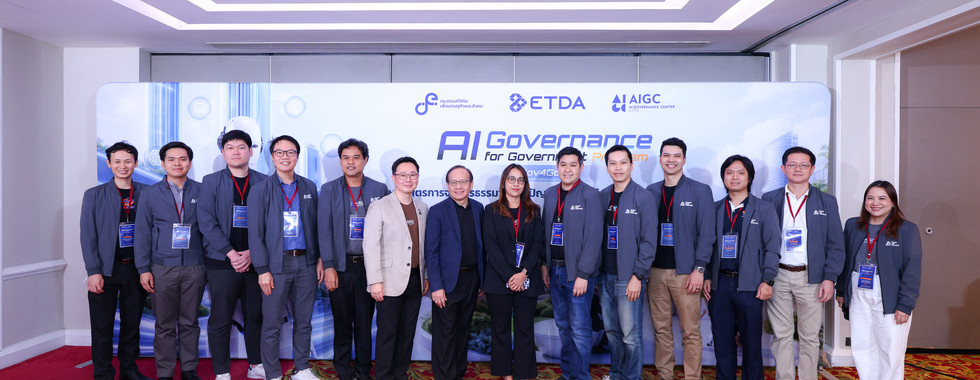
The AI Governance Practice Center (AIGPC), under the Electronic Transactions Development Agency (ETDA), serves as a central hub for expertise and collaboration between the public and private sectors, academia, and international organizations. The center has launched the "AI Governance for Government Program" (AI Gov4Govt) to develop knowledge, standards, and ethical guidelines for AI (AI Ethics & Governance) to ensure responsible and transparent AI adoption.
The Importance of AI Governance in Government
As Artificial Intelligence (AI) becomes a vital tool for public administration and achieving Sustainable Development Goals (SDGs), it also brings challenges regarding law, ethics, and public trust. The AIGPC program aligns with UNESCO’s "Recommendation on the Ethics of Artificial Intelligence" to ensure that AI development remains responsible and respects human rights. Without a proper understanding of AI Governance, agencies face risks such as privacy violations, unfair automated decision-making, and loss of public confidence.
Program Highlights
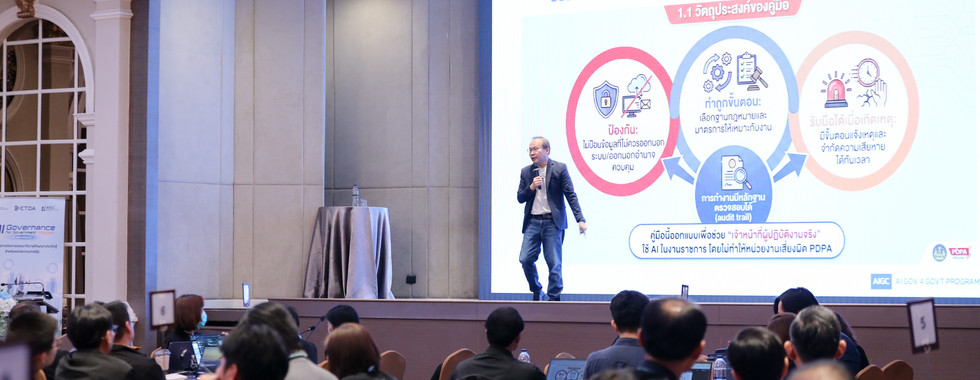
Policy and Oversight: Participants will learn to establish a Gen AI Usage Policy and develop internal oversight mechanisms, such as an AI Governance Council.
Practical Workshops: The sessions blend lectures with workshops on AI Value Creation and selecting use cases appropriate for the public sector.
Readiness Assessment: The program covers evaluating an organization’s readiness in terms of personnel, processes, data, and culture.
Legal and Ethical Frameworks: Deep dives into transparency, fairness, accountability, and public responsibility.
Target Participants
The program aims to train 200 personnel (two batches of 100) from 20 ministries, independent agencies, and public organizations.
Middle Management: Level 7 (C7) or above, responsible for setting policy and direction.
Specialized Officers: Those involved in IT Governance, IT Compliance, digital transformation, and organizational planning.
Event Details
Date: 26 – 27 March 2026.
Venue: Ballroom A, 1st Floor, Mandarin Hotel Bangkok.
Speakers: Certified coaches from ETDA and experts from the public and private sectors.
Participant Benefits:
Gain a clear understanding of AI Governance and public responsibility.
Receive frameworks for Gen AI Usage Policy that can be applied within their agencies.
Receive an e-Certificate upon meeting the training criteria.
Build a network for knowledge exchange among public sector leaders.

















Comments